Drilling rigs equipped with continuous flight augers and triple-barrel core barrels are mobilised across Albury-Wodonga to characterise the alluvial and residual profiles underlying proposed landfill cells. The Murray River floodplain deposits, together with colluvial soils along the Hume Freeway corridor, demand a thorough understanding of hydraulic conductivity and compressibility before any liner system is designed. Our field program integrates piezometer installation and constant-head permeability tests to establish baseline groundwater conditions, while undisturbed tube sampling provides specimens for triaxial and consolidation testing back at the laboratory. This phased investigation ensures that every cell design complies with the Environmental Protection Authority's siting guidelines for waste facilities in Victoria and New South Wales.
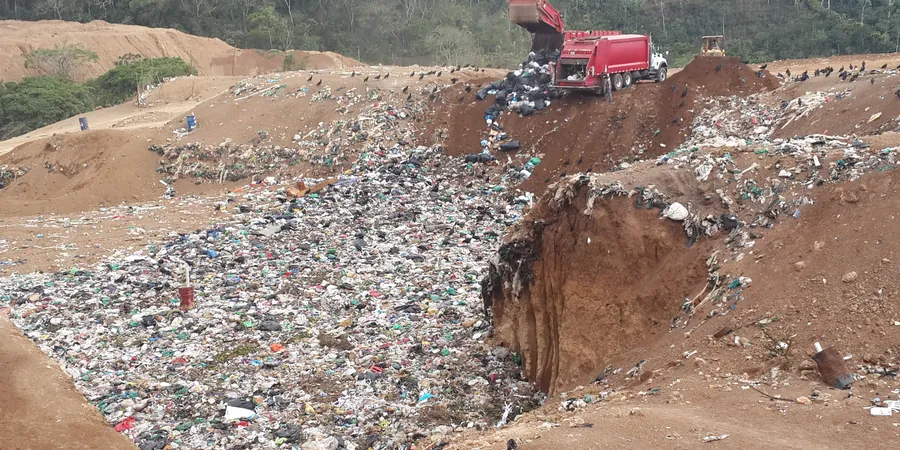
Characterising hydraulic conductivity and compressibility across the Murray River floodplain is the non-negotiable first step for any landfill expansion in Albury-Wodonga.
Methodology and scope
Local considerations
The contrast between the sandy terraces west of Albury and the clay-dominated flats near Wodonga creates a distinct risk profile for landfill geotechnics. On the sandy side, leachate migration potential is higher, demanding a composite liner with a geosynthetic clay barrier. On the clay side, low hydraulic conductivity is naturally present, but the high plasticity of the soil introduces desiccation cracking risk during dry spells. Both scenarios require site-specific compaction trials and long-term monitoring to confirm the barrier's integrity across seasonal cycles. Ignoring these local differences can lead to premature liner failure and costly remediation orders from the EPA.
Applicable standards
AS 1726 – Geotechnical site investigations, AS 4678 – Earth-retaining structures (applied to cell walls), Victorian EPA Waste Management Policy (Siting, Design and Management of Landfills), AS/NZS 1170 – Structural design actions (waste load surcharge)
Associated technical services
Site Characterisation & Liner Permeability Testing
Borehole drilling, piezometer installation, and falling-head permeability tests to confirm the natural barrier's compliance with regulatory targets. All work follows AS 1726 and EPA guidelines.
Slope Stability & Settlement Analysis
Limit-equilibrium and finite-element modelling of waste slopes and liner interfaces, using strength parameters from triaxial and direct shear tests. Settlement predictions inform final cell geometry.
Leachate & Gas Management Geotechnics
Assessment of drainage layer performance, gas venting system design, and long-term subsidence behaviour under leachate recirculation. We integrate geosynthetic data with soil compaction records.
Typical parameters
Frequently asked questions
What specific tests are required for a landfill liner system in Albury-Wodonga?
A standard liner investigation includes constant-head permeability tests, consolidation tests (to predict settlement under waste load), and triaxial shear tests on compacted clay specimens. Field density verification via nuclear gauge or sand-cone method is also routine.
How does the local geology influence landfill geotechnics in the border region?
The Murray River floodplain deposits vary from sandy terraces on the Albury side to high-plasticity clays near Wodonga. Sand-rich profiles demand composite liners with geosynthetic barriers, while clay-rich profiles need careful moisture conditioning to avoid desiccation cracking during compaction.
What is the typical cost range for a landfill geotechnical investigation in this area?
A full investigation including boreholes, permeability tests, and laboratory analysis typically ranges between AU$3.420 and AU$11.960, depending on the number of boreholes and the complexity of the liner design required.
Can existing landfill cells be expanded without a full reinvestigation?
No. Any cell expansion triggers a new geotechnical assessment under EPA guidelines. At minimum you need updated permeability data, settlement modelling for the extended footprint, and slope stability checks for the new waste height.