The difference between sites in West Albury and those across the river in Wodonga can be striking. On the Albury side, you often hit dense gravels and clayey sands near the surface, while Wodonga frequently presents deeper layers of alluvial silts and soft clays before you find competent bearing strata. That's why we rely on the Standard Penetration Test to get a clear picture of what's happening underground. In both cities, the SPT gives us a direct measure of soil resistance with depth, which is essential for designing shallow or deep foundations. Our team has been running these tests across Albury-Wodonga for years, and we know exactly how the local geology can affect your results. It is a straightforward method, but reading the blow counts correctly in this region requires experience.
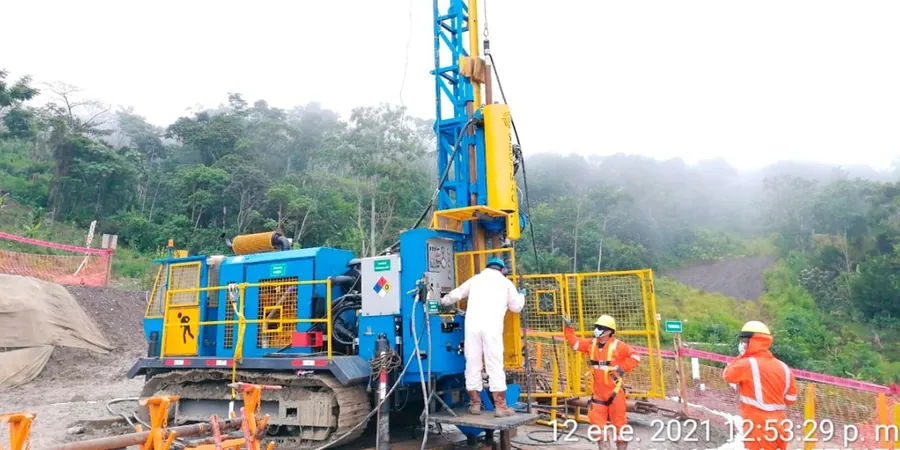
Reading blow counts correctly in Albury-Wodonga's alluvial soils requires local experience — the gravel lenses can easily skew your N-values if you are not paying attention.
Methodology and scope
Local considerations
In Albury-Wodonga, we see many instances where a single SPT boring is used to characterise a whole block, and that is a gamble. The alluvial deposits here can change laterally within metres — one spot might show dense sand, and ten metres away you hit soft clay. If you only drill one hole, you miss those variations. The real risk is underestimating settlement under a slab or footing because the N-values from one boring were too optimistic. We always recommend at least three test locations for a standard house block, and more for commercial sites. Another issue is not correcting the SPT results for overburden pressure; in deep boreholes, the raw N-values can look higher than they really are due to confinement.
Explanatory video
Applicable standards
AS 1289.6.3.1 (Standard Test Method for SPT), AS 1726:2017 (Geotechnical Site Investigations), AASHTO T-206 (SPT for soil exploration)
Associated technical services
Continuous SPT Profiling
We perform SPT at every 1.5 m interval in the borehole, giving a continuous log of soil strength with depth. This is ideal for multi-storey buildings where you need to identify the bearing layer precisely. We use a tracked rig that can access tight residential sites in East Albury and the newer estates in Wodonga.
Targeted SPT at Critical Depths
For smaller projects like house extensions or retaining walls, we run SPT only at key depths where the foundation will bear. This reduces drilling time and cost while still giving you reliable N-values for the design. We coordinate with the engineer to select the test depths based on the proposed footing level.
Typical parameters
Frequently asked questions
What is the difference between N-SPT and the corrected N60 value?
The raw N-value from the field is the total blows for the last 300 mm of penetration. N60 applies corrections for hammer efficiency, rod length, sampler type, and borehole diameter to give a standardised value used in bearing capacity and liquefaction analysis. We always report both the raw N and the N60 in our logs.
How does the shallow water table in Wodonga affect the SPT results?
When the water table is above the test depth, the soil can become looser or the borehole may collapse. We use casing or drilling mud to keep the hole open. The blow counts in saturated fine sands can sometimes be lower than the true in-situ density because of pore pressure build-up, so we note the groundwater conditions on every test record.
What is the typical cost for an SPT borehole in Albury-Wodonga?
The cost for a single SPT borehole to 10 m depth, including mobilization within the twin cities, usually falls between AU$860 and AU$1,250. This includes the drilling, sampling, and a basic log. Additional tests like laboratory classification or deeper holes will increase the total.
Can the SPT detect gravel layers that might stop a driven pile?
Yes, the SPT is very effective at identifying dense gravel or cemented layers. A sudden jump in blow counts, say from 10 to 50 blows per 300 mm, indicates a hard layer. We note the depth and thickness of such layers so the pile designer can plan for potential refusal or pre-drilling.
How many SPT locations are needed for a residential slab in Albury-Wodonga?
For a standard house slab on a single lot, we recommend a minimum of three SPT boreholes: one near each corner and one in the centre. If the site has variable fill or previous creek lines, we may add one or two more. This ensures the N-values are representative across the whole footprint.