In Albury-Wodonga, many pavement projects hit a snag because the subgrade conditions vary so much between the river flats and the higher ground. We see it often: a rigid pavement design that works near the Murray River fails on the upland clays because the modulus of subgrade reaction was guessed instead of measured. Our lab steps in with site-specific CBR and plate load tests to give designers real numbers. Before pouring any concrete slab, we recommend a subgrade investigation to map weak zones and a CBR test to set the design k-value. This avoids costly overdesign or premature cracking from underestimated support.
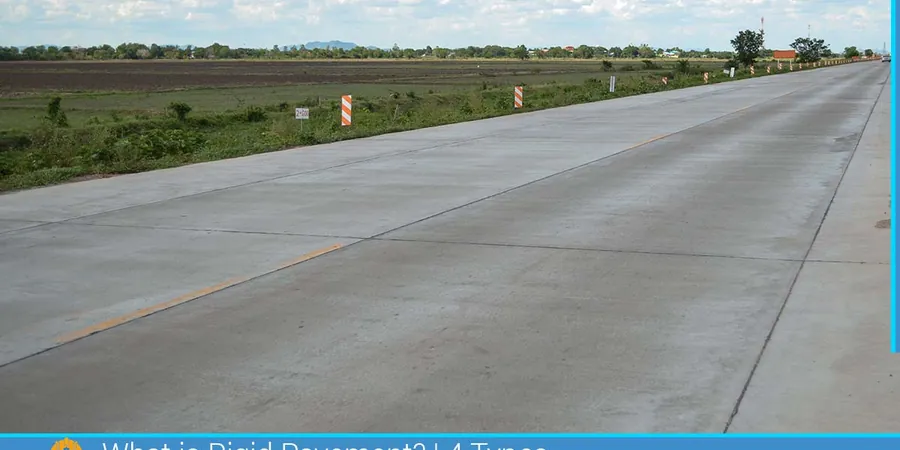
A rigid pavement is only as good as the subgrade beneath it — and that subgrade changes block by block in Albury-Wodonga.
Methodology and scope
Local considerations
Albury-Wodonga sits on a mix of alluvial soils from the Murray River floodplain and residual clays from the surrounding hills. The water table near the river can sit as shallow as 1.5 metres in wet seasons, which softens subgrades and reduces bearing capacity for rigid pavements. On the hills, the clay soils are stiff when dry but expand with moisture, creating differential movement across slab joints. Without proper geotechnical input, a rigid pavement design in Albury-Wodonga risks fatigue cracking from edge loading or pumping of fines through joints. Our testing identifies these risks early so the design team can specify drainage, subbase layers, or stabilisation before concrete is poured.
Applicable standards
Austroads Guide to Pavement Technology Part 2: Pavement Structural Design, AS 2876:2011 – Concrete kerbs and channels (guide for residential streets), AS 1012 series – Methods of testing concrete (for flexural strength verification)
Associated technical services
Subgrade CBR Testing
Four-day soaked CBR at field density and moisture to determine design strength for concrete pavement thickness.
Plate Load Tests (k-value)
In-situ plate bearing tests on prepared subgrade to measure the modulus of subgrade reaction directly.
Proctor Compaction
Standard and modified Proctor to define optimum moisture and maximum dry density for subgrade and subbase layers.
Soil Classification Suite
Atterberg limits, particle size distribution, and shrinkage index to classify subgrade and predict volume change behaviour.
Typical parameters
Frequently asked questions
What is the difference between rigid and flexible pavement design for Albury-Wodonga roads?
Rigid pavement uses a concrete slab as the structural layer, distributing load over a wider area through flexural strength. Flexible pavement relies on layered granular materials and asphalt. In Albury-Wodonga, rigid pavements are often chosen for heavy-load areas like truck stops and intersections because they resist rutting better, but they require accurate subgrade k-value data to avoid cracking. Our lab provides the CBR and triaxial numbers needed for both approaches.
How much does rigid pavement design testing cost in Albury-Wodonga?
A typical testing program for rigid pavement design in Albury-Wodonga ranges from AU$3,320 to AU$9,340, depending on the number of CBR tests, plate load locations, and soil classification required. We give a fixed quote after assessing project scope and site access.
Do I need a plate load test for a small residential driveway?
For a small residential driveway, a CBR test plus Atterberg limits is usually sufficient to determine subgrade support. Plate load tests are recommended when the pavement will carry commercial vehicles or when the subgrade appears variable across the site. Our lab can advise which combination fits your specific Albury-Wodonga project after reviewing the site soil samples.