A common mistake we see from builders in Albury-Wodonga is assuming the ground behaves the same across the entire Murray River floodplain. One site might have stiff clay near the surface, while a block only 200 metres away sits on loose sandy silt that won't support a slab without deep treatment. Without a proper soil mechanics study, you are essentially guessing the bearing capacity and settlement behaviour of the ground. That guesswork often leads to cracked slabs, differential movement, and costly remediation after handover. A thorough investigation — including test pits and laboratory classification — gives you the numbers you need to design foundations that actually match the soil conditions. This is especially critical in Albury-Wodonga, where seasonal moisture changes can turn expansive clays into a structural headache. Combining the fieldwork with penetrometer testing helps confirm the strength profile at depth, while soil classification in the lab identifies shrink-swell potential before the slab is poured.
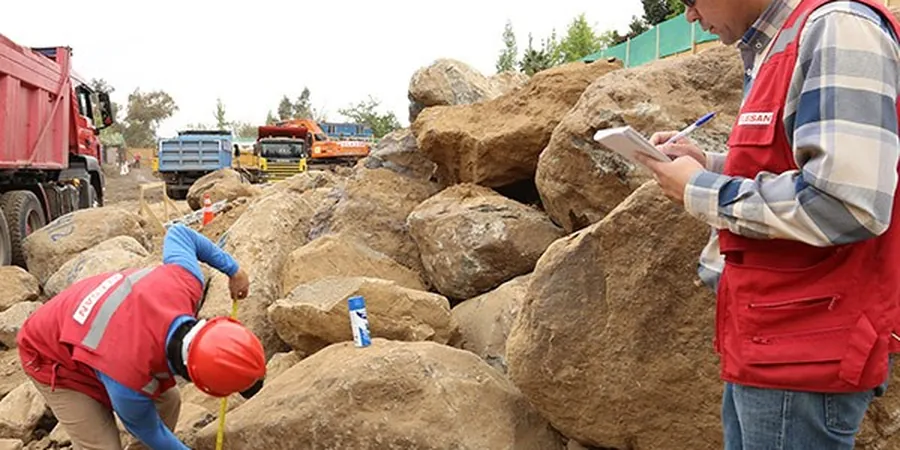
In Albury-Wodonga, the biggest foundation risk is not weak soil — it is soil that changes behaviour with moisture.
Methodology and scope
Local considerations
Albury-Wodonga sits in a climate transition zone — hot dry summers followed by wet winters with around 700 mm of annual rainfall. That seasonal swing pushes some clay soils through cycles of shrinkage and swelling that can lift a corner of a house by 40 mm in a dry year. If your soil mechanics study does not account for this reactivity index, you risk designing a foundation that works in summer but fails in winter. The Murray River alluvium also presents variable density lenses; loose sand pockets can settle unevenly under footing loads. Identifying those lenses early through careful borehole logging and SPT testing allows you to either over-excavate and replace the weak material or switch to a deeper foundation system. We always flag these risks in our reports so the structural engineer has the data to make informed decisions — not assumptions based on neighbouring sites that might have completely different soil profiles.
Applicable standards
AS 1726-2017 Geotechnical site investigations, AS 1289 series (Methods of testing soils for engineering purposes), AS 4678-2002 Earth-retaining structures, AS 2870-2011 Residential slabs and footings (reactive site classification)
Associated technical services
Field Investigation & Sampling
On-site borehole drilling, test pitting, and undisturbed sampling using thin-wall tubes and Shelby tubes. We log soil strata visually and with SPT N-values, record groundwater strikes, and classify materials in the field per AS 1726. All samples are sealed, labelled, and transported to our NATA-accredited laboratory.
Laboratory Testing & Parameter Report
Full suite of geotechnical lab tests including particle size distribution, Atterberg limits, Proctor compaction, triaxial shear (UU/CU), and consolidation. Results are compiled into a comprehensive soil mechanics study report with bearing capacity calculations, settlement estimates, and reactive site classification for residential and commercial projects.
Typical parameters
Frequently asked questions
What does a soil mechanics study in Albury-Wodonga typically cost?
For a standard residential block with 3 to 5 boreholes and a full laboratory suite, the cost ranges between AU$5,170 and AU$9,040. This includes field mobilisation, sampling, testing to AS 1289, and a written geotechnical report. Larger commercial sites with deeper holes or additional testing will fall at the upper end of that range.
How long does it take to get the soil mechanics study results?
Most projects are completed within 10 to 15 business days from the date of field work. If you need a preliminary bearing capacity estimate sooner, we can provide an interim report after the first round of lab tests — typically within 5 to 7 days. Full consolidation and triaxial tests require more curing time.
Do I need a soil mechanics study for a single-storey house in Albury-Wodonga?
Yes, especially if the site is near the Murray River floodplain or on the slopes of West Albury. The local clay soils can be highly reactive, and AS 2870-2011 requires a site classification (A, S, M, H1, H2, or E) before slab design. Without a soil mechanics study, you cannot confirm the classification, and you risk designing an inadequate footing system.
What is the difference between a soil mechanics study and a geotechnical investigation?
A geotechnical investigation is the broader process that includes drilling, sampling, in-situ testing, and laboratory work. The soil mechanics study is the analytical part of that investigation — it focuses on the mechanical properties of the soil: shear strength, compressibility, permeability, and reactivity. In practice, the terms are often used interchangeably, but the study is the deliverable that contains the design parameters.